How to Track Open Carrier Quotes Without a Spreadsheet
Brokers can replace the sheet with a system built around quote stages.
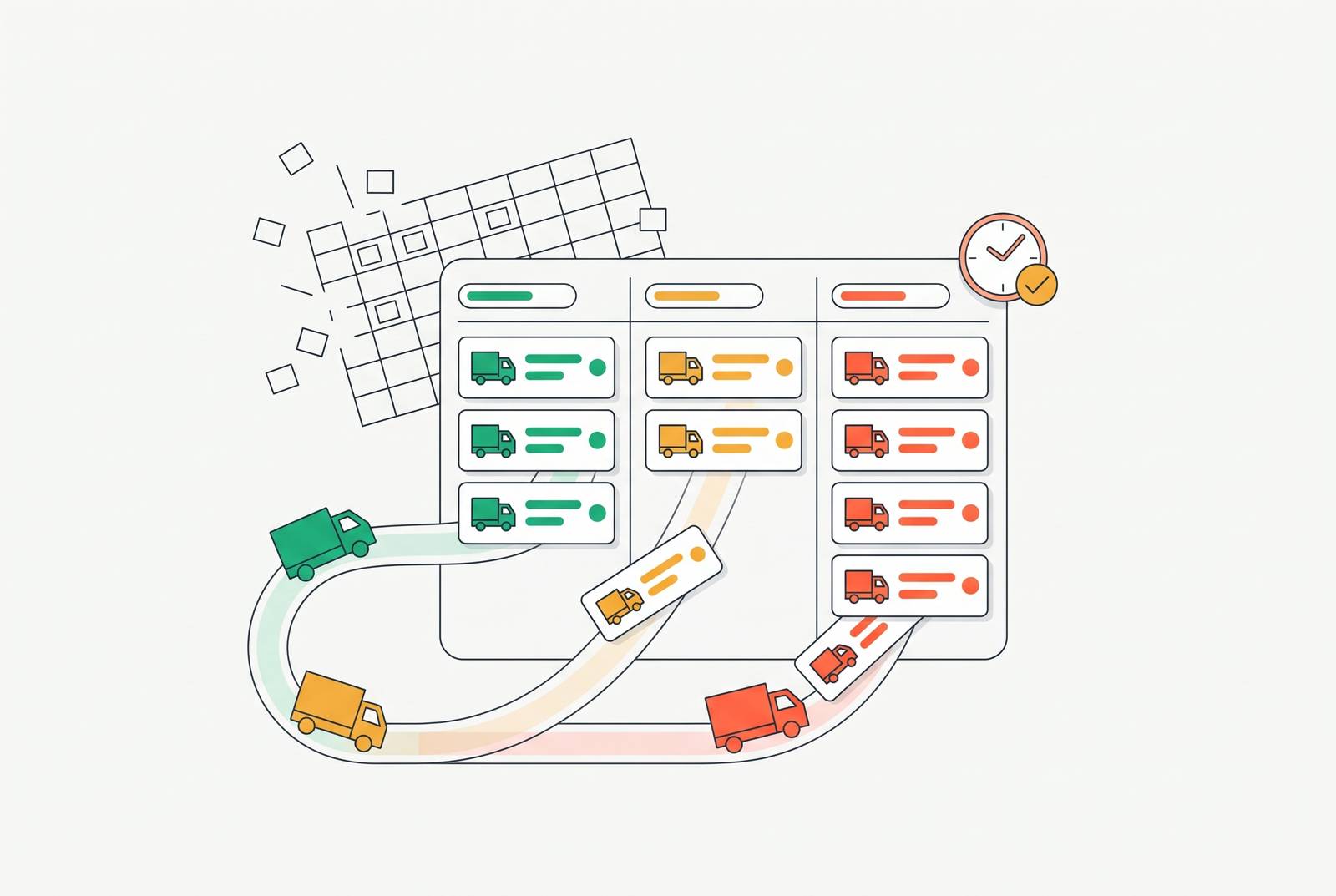
Tracking open carrier quotes without a spreadsheet takes a simple system that keeps up with the work as it changes. Quote status, carrier follow-up, and changing rates depend on information a spreadsheet cannot keep current on its own. A replacement should connect those moving parts so the brokerage pays for more than a new place to do the same work by hand.
Why open carrier quoting is structurally different from other freight work
Direct Auto Ship states that 95% of cars shipped use open transport, including dealer inventory and private sales. For brokers, that means dealing with lots of quotes that look alike but can still turn on price. A rate can change even on a route the broker knows well. Navi Auto Transport details how per-mile rates vary by distance band, vehicle size, season, and carrier availability, including peak-season surcharge windows.
Each quote depends on pickup and delivery locations, vehicle type and condition, timing, and which carriers are running the lane. Any of those can change between first contact and booking confirmation. Even a small book can therefore leave a broker tracking changes across dozens of transactions, each at a different stage.
How spreadsheets break specifically in this environment
A carrier has not replied, a customer is waiting for confirmation, and a quote is nearing expiration. The spreadsheet may have a row for each transaction but leave the rep unsure which one needs attention now. That distinction is the first structural failure. A rep has to check an inbox or recall the last conversation to know where things stand. Better formatting can make an outdated status easier to read, but it cannot make it current.
The same gap affects pricing because a recorded rate is not a market position. A number entered this morning does not tell the broker whether it remains competitive for that lane today. Without rate context, the sheet preserves the answer while losing the conditions that made it reasonable. The number is there. Its usefulness is uncertain. That is a poor foundation for a workflow in which availability and timing can change before the customer approves.
A further weakness appears when the brokerage needs to reconstruct a disputed load. The vehicle condition may have been documented incorrectly, the carrier may not have received the pickup window, or payment may have been delayed. Establishing what was communicated and when requires access to the exchanges in separate email threads. The broker then has a record of the transaction without a dependable account of how it unfolded.
A rep quotes manually, checks carrier availability elsewhere, emails the carrier, updates the record, and sends confirmation. At each handoff, the status in the record can fall out of step with the work. More volume means more reconciliation. Status updates take longer, paperwork gets missed, and carrier conversations become harder to reconstruct, even when everyone is working carefully.
What a working quote-tracking system actually needs to do
The right replacement depends on which failure is costing the brokerage most today, but every active quote needs a visible stage. Those stages should include submitted, carrier contacted, rate confirmed, customer approved, and dispatched. A rep should not need an email thread to interpret them. The system’s record needs to show where the transaction stands.
Carrier follow-up requires more than a stage label because waiting is itself work that needs tracking. The system should surface which carriers have not responded and by when, so that follow-up does not depend on someone remembering to check. Rate anchoring serves a different purpose. Recording the lane, rate, and date lets the brokerage see patterns over time, including which carriers consistently quote well on which routes.
Customer communication belongs with the quote for the same reason. A quote sent, a revision requested, and an approval given should be visible in one place. Documents need a similar home on the load record. The Bill of Lading, condition report, and carrier insurance certificate should stay with that record so no one has to hunt for attachments at delivery. The inbox should not double as the filing department.
Together, these functions give brokers a practical basis for evaluating a tool or a system they build themselves. Rate history supports pricing context, and communication logs and attachments support reconstruction when questions arise. A tool that handles one well does not automatically solve the others.
Three approaches brokers actually use to replace the spreadsheet
A configured general CRM is the lightest approach. Custom pipeline stages and fields can put quote status and customer communication in one place for a brokerage handling lower volume. This suits brokers early in growth who want to stop losing quotes in email before committing to a transport-specific platform. The boundary is carrier coordination. Load board data, carrier availability, and dispatch are still in separate systems, so the rep has to move information between them by hand.
Auto transport TMS/CRM platforms built for this work bring more of it together, though they differ in what they cover. CarShipIO combines CRM, TMS, and load board functions with Central Dispatch integration and mobile-capable quoting. This setup is meant to cut down on switching between systems from quote to dispatch. Super Dispatch connects dispatch through payment, while relying on third-party CRM integrations for leads and quoting.
ProABD offers another combined package, with 20+ years in the market. It includes automated lead response, quote generation through TAQ, or Transport Auto Quoter, credit card processing through Authorize.Net, and load board integration. CargoFlare, launched in May 2026, combines dispatch management, CRM, quoting, invoicing, workflow automation, communication tracking, carrier coordination, digital document management, and AI-powered assistance. Its advanced AI automation systems are expected to roll out progressively through Q4 2026. It offers a 30-day free trial with no credit card required.
The third approach adds an embedded automation layer to the tools the brokerage already uses. This fits a brokerage that has already invested in a CRM but still handles carrier follow-up, customer status updates, and quote expiration alerts manually. Triggered sequences can close those gaps without a full platform switch. The existing system mostly works. The exceptions consume the time. In that situation, replacing everything may be less relevant than connecting the steps that still require a rep to intervene.
These approaches form a spectrum. A configured CRM addresses customer-side visibility, a transport platform integrates more operational functions, and an automation layer connects work around existing tools. The choice depends on how much work the brokerage handles now and how many systems it already runs. It also depends on where information stops moving with the transaction.
How to audit your current workflow before choosing a tool
To make that choice concrete, a brokerage can audit its workflow this week without buying anything. The common mistake is to shop for relief from the most irritating step and end up with three disconnected tools, with a spreadsheet still holding them together. Start instead with the full quote lifecycle. From first lead contact to dispatch, write down every step, who performs it, and which tool or non-tool holds the work. Count the handoffs as well as the steps.
Next, find where quotes sit the longest without moving. Look for where a rep repeatedly has to ask a colleague, “what’s the status on this one? That question marks a visibility gap. Write down whether the delay is in carrier follow-up, customer approval, or another part of the process just mapped.
Then count every place where a quote-related fact can live. Email, the spreadsheet, a load board login, phone notes, and text threads all belong in that inventory. Each separate location creates a gap where status can fall out of sync. The count also helps distinguish a brokerage that lacks a usable record from one that has a record but spends too much time keeping it updated.
Finally, identify the single most expensive failure. It might be a lost lead, a double-booked carrier, a disputed delivery with no condition record, or a payment delayed because the invoice was elsewhere. That failure supplies the case for change. It frames return on investment around an operational loss rather than a vendor’s feature list, and it gives the brokerage a reason to choose one improvement before another.
The audit can anchor a practical 30-day deployment path. Week 1 is for documenting the current workflow, while Week 3 is for activating the highest-impact single automation, such as carrier follow-up or customer status updates. The audit determines which one comes first. Week 4 is for measuring changes in close rate and response time before expanding the scope.
What the transition actually costs, and what makes it stick
The strongest objection to replacing a spreadsheet is the disruption of moving records, changing carrier interactions, and teaching agents a new process. Those costs are real and often understated by vendors. A connected workflow still needs data that is right and people who are willing to use it. Buying the tool does not complete the transition.
Data migration comes first because quote records, carrier contacts, and lane history need to reach the new system without errors. Anything left behind becomes a reason to retain the spreadsheet as a backup. That backup can quietly become the actual system again. The cost is therefore not only the work of moving data, but the risk of maintaining two competing records afterward. A replacement that lacks the history needed for daily work gives the team a practical reason to return to the old one.
Carrier re-onboarding is a separate job, especially if the new system changes how carriers get load details or confirm availability. The brokerage has to explain the change to its network. This is relationship work. Agent retraining has a similar human requirement, because reps will route around a system they do not trust or understand. The people who own the work need to inform what gets built and see the resulting process as theirs.
For that reason, the first implementation should be narrow. One bottleneck and one workflow give the team a measurable proof point before the scope expands. Automated carrier follow-up, for example, can take the place of email chains sent by hand while leaving the rest of the quote cycle for later. The value can then compound as reps move recovered time into higher-value work. A brokerage can handle more volume without increasing headcount in proportion.
Keeping that gain takes care beyond the first build. Lanes change, carrier networks shift, and the first version of a workflow is not the final version. An embedded approach, whether through a purpose-built platform or a partner who remains involved, allows the system to keep up and avoids another handoff. The practical opportunity is more capacity from the team already doing the work. Talent and ambition were not the constraint that a spreadsheet could remove. Access to connected systems is what lets the brokerage act on them.