First AI System Selection Criteria for a Sub-50-Person Service Firm
Small firms should pick AI based on their costliest bottleneck, not feature count.
First AI System Selection Criteria for a Sub-50-Person Service Firm
Why sub-50-person service firms pick their first AI system badly
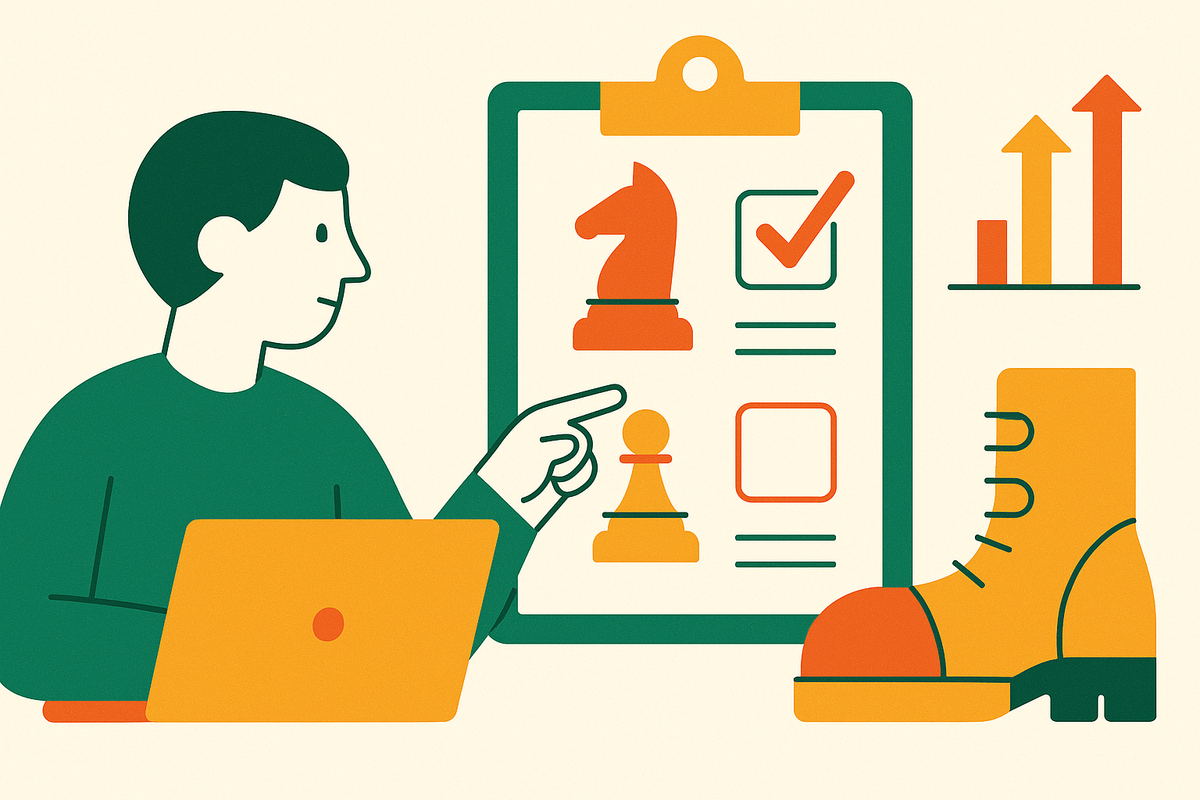
The selection question is not "which AI is best" but "which bottleneck is costing this firm the most, and does this system address it".
What the 68 percent figure actually counts is ad hoc ChatGPT use, with individual employees experimenting without any policy, reflecting an "exploration phase" rather than production deployment U.S. Chamber of Commerce and Teneo 2025 Small Business Index. That's exploration rather than deployment, a distinction that matters because exploration doesn't compound. It just sort of sits there, evaporating a little goodwill each time it half-works.
The default mistake per the 2026 buyer's guide is feature shopping: owners see "100+ AI features," assume more equals better, and end up paying for features they never use and integrations they still have to build. The second is pricing myopia, buying for the business as it exists today with no model of what the invoice looks like once the client list, the contact volume, or the seat count doubles. Both mistakes get papered over by the fact that almost nobody checks the results afterward. Most small businesses using AI tools have no written policy, no measurement framework, and no escalation path digitalapplied.com. Most owners genuinely cannot say whether the tool is working. They can say whether it feels like it's working, which is a different and much less useful thing.
The result falls short of transformation. It's sprawl, made up of a chatbot here, a CRM there, and an automation platform holding it together with what amounts to digital duct tape. None of these tools are individually bad. They're just uncoordinated, purchased on separate days for separate reasons, none of them tied to the one workflow that was actually choking the business. The fix starts by throwing out the question "which AI is best" entirely. A narrower and less exciting question serves better: which bottleneck is costing this firm the most money right now, and does this specific system touch it? The 68% adoption headline (U.S. Chamber of Commerce and Teneo, 2025) versus the 15–20% who are seeing real results, the gap between those two numbers is the problem the article solves (U.S. Chamber of Commerce and Teneo 2025 Small Business Index)
What a bottleneck means in a sub-50-person service firm
In a small business, the owner is also the operator, the sales lead, the customer service team, and the strategist, and every hour spent on work that does not require their judgment is an hour not spent on work that grows the business.
A bottleneck, in this context, is a specific, nameable workflow, not a department. It's a specific, nameable workflow, not "sales" or "operations."" It's a specific, nameable workflow, quoting, intake, scheduling, follow-up, document processing, where capacity gets consumed without proportional output. Calling it a department is how firms end up buying department-wide software for a problem that lives in one folder on one shared drive.
A bottleneck is the constraint that, if removed, lets everything downstream move faster, or lets the firm say yes to work it currently has to turn down. A slow CRM is annoying. A quoting process that takes four days when the competitor takes four hours is a bottleneck, because it's actively costing the firm deals, not just goodwill.
The bottleneck test has to be the selection filter. A system aimed at a real constraint removes a ceiling on the business. A system chosen because the demo was slick just adds another line item to the tool pile. And for firms deciding where to point their first real AI effort, the operational bottleneck almost always beats the marketing opportunity: recovering internal hours frees capacity the firm can redeploy, while producing more content the firm didn't have time to distribute anyway does not.
There are tells that a workflow is the actual bottleneck rather than just an irritant. It backs up and delays everything behind it. It requires the owner's or a senior staffer's time for tasks that are mostly mechanical. And it's the first thing that breaks the moment volume ticks up. Before any vendor call happens, the firm needs to name that workflow specifically, not "operations," not "sales," the actual named process, and check that the tool on the table touches it.
The five criteria that predict real return for a small service firm
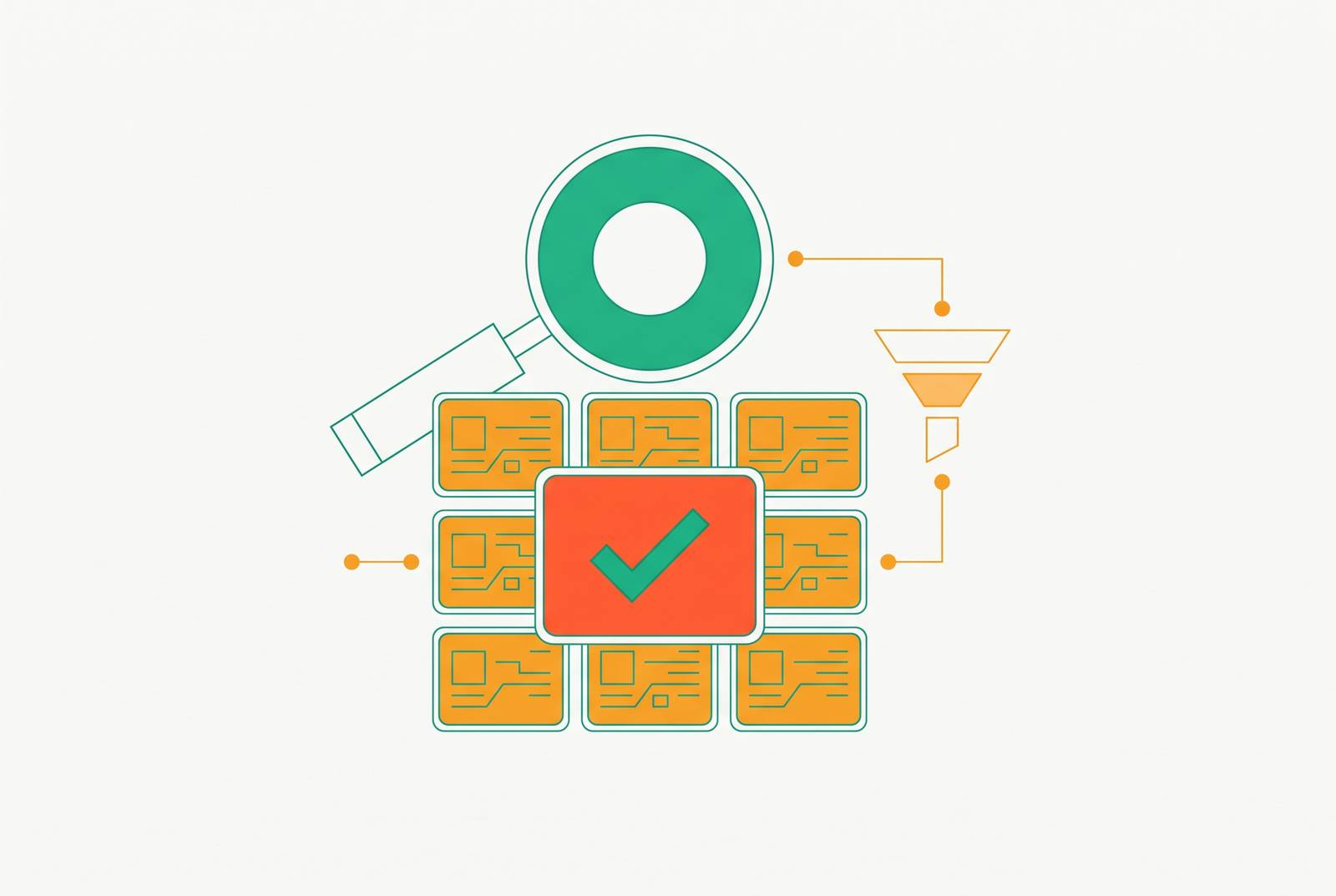
Treat these five as filters. A scorecard tells you which system scores highest. A filter tells you which systems to throw out before wasting a call on them, which is the more useful function at this stage.
Strategic fit before feature count. Before talking to a single vendor, write down the firm's top three operational pain points. Hold every demo against that list instead. Slow lead response calls for AI that unifies multi-channel communication in one place; chronic no-shows call for automated booking and reminders; document-heavy intake calls for extraction and routing. If the salesperson can't point to the exact feature that solves the exact problem on the list, the rest of the demo is noise.
Integration with what the firm already runs. AI implementation works when it slots into the CRM, the email system, and the operations tools already in daily use, and it fails when it demands a new platform the team has to learn from scratch. An isolated tool doesn't reduce work, it adds a second inbox to check. Open APIs and native connectors to existing systems should be non-negotiable.
Total cost of ownership matters more than the number on the homepage. The spread between a flat-rate platform and a usage-priced one can top $11,000 a year for a typical 5,000-contact firm thecrunch.io. Onboarding fees, middleware like Zapier or Make.com, training hours, and the cost of switching later all belong in that number too. A workable rule: the system's monthly cost shouldn't exceed a defined share of the specific revenue or cost line it touches, and if it can't be tied to a line item at all, there's no accountability built in. Average annual AI spend for a small business runs around $2,400, a reasonable starting benchmark, but model the number at double current volume before signing anything digitalapplied.com Phos AI Labs.
Transparency, data control, and a real human escalation path. Vendors that lock activity inside an opaque proprietary system should get crossed off the list, the firm needs visibility into what the tool is doing and why. Escalation to a person isn't optional either: AI is built for well-defined, repetitive input, and anything complex or emotionally loaded needs a clear, fast route to a human.
Simplicity and speed to a first visible result. The first AI workflow a small firm deploys should show something within days, not months, because complexity kills adoption before it gets a fair shot. And the practical test of adoption is blunt: if the owner isn't using it, nobody is. Tools that slide into an existing flow get used; tools that require learning a new platform get abandoned quietly, then loudly, then uninstalled. Criterion 1 (Strategic fit before feature count) Criterion 2 (Integration with tools the firm already uses) Criterion 3 (Total cost of ownership, not sticker price) Criterion 5 (Simplicity and speed to first visible result)
Where AI ROI concentrates in service firm operations
Not every corner of a small firm benefits equally, and tools built for a company with a dedicated IT department rarely translate cleanly to a team running on ordinary small-business software. ROI concentrates where the work is high-volume, repetitive, and language-heavy. That's the pattern, and it holds firm across sub-50-person service businesses regardless of industry.
Administrative automation, scheduling, invoicing, data entry, tends to pay back fastest, because the inputs are predictable and the recovered hours go straight back to the owner or a senior operator. One documented case: an insurance broker cut manual data entry by 80 percent. Another: a freight company recovered more than 160 hours a month. Those numbers aren't hypothetical upside, they're what happens when the bottleneck identified matches the tool deployed against it.
Customer service and intake come next. AI-driven routing and response can handle 40 to 60 percent of routine inquiries, order status, scheduling, basic troubleshooting, without a human touching them digitalapplied.com Phos AI Labs. For a firm that can't afford a dedicated support function, this is the category most likely to change what the business can actually take on, not just how tidily it runs. The design requirement here is non-negotiable: routine goes to the machine, anything complicated or emotionally charged goes to a person.
Content and marketing automation delivers the fastest payback and the lowest implementation cost of the common categories; a coordinator who used to spend roughly 4 hours drafting a week's worth of social posts can produce the same output in under an hour digitalapplied.com. Still, for most sub-50-person service firms, it should sit lower on the priority list. Recovering operational capacity moves the business structurally forward; producing more content mostly just produces more content.
ROI runs thinner in three areas. Complex financial analysis usually doesn't justify dedicated AI tools at this scale, the data sets are too small. Strategic planning still needs a human who actually knows the market and the client relationships, no model replaces that judgment. And high-stakes legal or compliance work can use AI for document review, but the consequential calls still belong to a professional.
None of this guarantees a smooth outcome even when the category is right. The gap between that median and the firms actually seeing gains almost always traces back to one thing: whether the system targeted a genuine bottleneck, or got adopted broadly and vaguely with no target at all. Where ROI is weaker at this scale
The 30-day pilot as the right unit of first deployment
Thirty days, not thirty weeks AIConsultingLab. Multiple practitioner frameworks converge on the 30-day pilot as the correct starting unit for a small firm's first deployment, a defined workflow, a defined measurement, a defined end date AIConsultingLab. Not a six-month initiative dressed up as a "phase one AIConsultingLab." Automation projects that stretch across half a year rarely survive contact with the business as it actually operates day to day, and the audit step at the start is usually the one everybody skips, which is also usually why the project dies later.
The structure is straightforward. Pick the one workflow already identified as the real bottleneck. Choose the simplest tool that fits the systems already in place and doesn't require a full IT function to configure. Set the success criteria before launch, hours recovered, response time cut, tasks resolved without a human, and train exactly one person on it first: the owner or the relevant operator.
Ongoing platform costs run in accessible monthly ranges for standard automation tools, and AI API costs for SMB-scale workflow intelligence typically run in the tens of dollars per month AIConsultingLab. The financial exposure of running a 30-day test is low AIConsultingLab. What it reveals is not.
That's really the pilot's job description. It tells the firm not only whether the tool works but also whether it targeted the right bottleneck. A pilot that produces a measurable number confirms the diagnosis. A pilot that produces nothing is usually a targeting failure rather than a technology failure, and it should be treated as one before blaming the software. Projects without a sponsor at the top fail more often, and at this size, sponsorship doesn't mean signing the invoice. It means the owner actually opening the tool. Deployment benchmark (Helium42, September 2026) Days 43–60: production deployment with ROI tracking active and user adoption above 70% (Gartner) Days 61–90: performance optimization complete, second use case scoped, internal champion program operational, documented efficiency gains of 30–40% (digitalapplied.com, Phos AI Labs, AIConsultingLab)
Build or buy: embedded AI engineer versus an implementation partner
For a firm with no technical function of its own, this decision carries more weight than it looks like at first glance, and the instinct that building in-house is more customizable, therefore smarter, doesn't hold up well at this scale.
Fully loaded cost in 2026, including benefits, payroll taxes, equipment, and management overhead, runs well above a six-figure base salary, a commitment that competes directly with a senior operator or a new service line. Finding one takes three to six months, meaning half a year of recruiting before a single workflow is live. And the role itself isn't trivial, the person needs to make real senior-level calls on orchestration and evaluation design, this isn't a job that reduces neatly to a ticket queue. Unless the firm already has a defined AI roadmap, the internal bandwidth to manage the relationship, and enough workflow complexity to earn the cost, the embedded-engineer route tends to front-load expense and delay well ahead of any payoff.
The alternative market has matured quickly. The selection criteria mirror the tool criteria from earlier almost exactly: does the partner build into systems the firm already runs, does it design for the owner's adoption first, does it start with the simplest workflow likely to show a result fast. DIY saves the partner fee but adds real staff hours; a managed implementation usually gets to a working result considerably faster, and that time-to-first-result gap, not the invoice line, is the honest cost comparison.
A middle path exists too: an embedded engagement model that spends the first couple of weeks finding the highest-leverage opportunity, builds a production system around it, then stays attached as the firm's needs compound. The advantage isn't just speed: an embedded AI partner who stays past the first win can scope the second use case from inside the firm's real operations, not from a brief written earlier, and this is the structural advantage over a one-time implementation sprint. That's the real structural edge over a single implementation sprint that ends the day the invoice clears. A contractor who fixes the leak and leaves differs from one who happens to know exactly where the pipes are the next time something breaks. The 2026 market has a range of firms designed specifically for SMBs under $5M in revenue (project-based, sprint-based, and embedded retainer models exist at different price points and engagement depths (phosailabs.com roundup, July 2026) (gurusup.com)) Relevant to whether to build or buy: the proof points (80
Sources
- How to Choose an AI Managed Services Provider: The 2026 Selection Framework – MSP Corner
- Best AI for Business: 2026 Selection Guide
- Small Business AI Adoption: 68% Use It, Most Wing It
- Best AI Implementation Firms for SMBs in 2026
- How to Choose an AI System for Small Business
- Boutique AI consulting firms vs Large Consultancies: Pricing and Service Comparison 2026 - Vstorm