How SMBs Are Using AI to Do the Work of a Specialist Without the Headcount
AI handles the repetitive work that kept specialists from focusing on judgment calls.
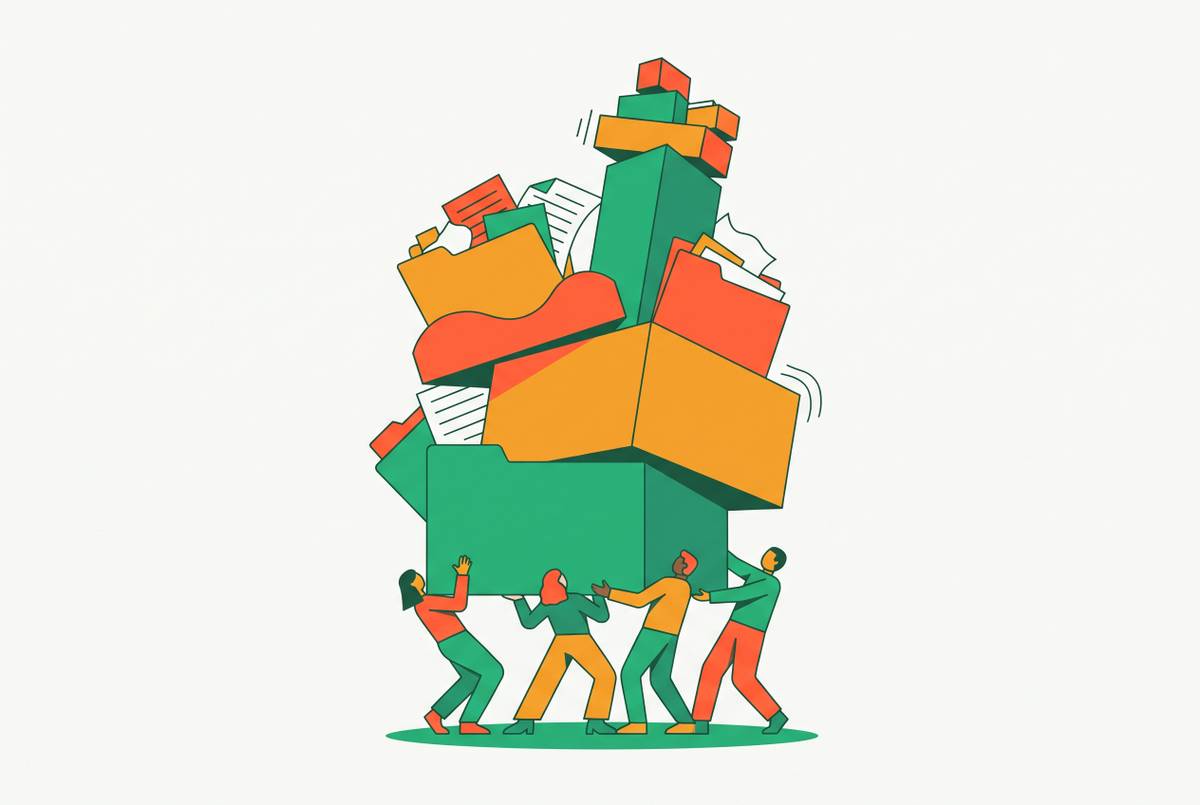
A small business that needs specialist-level work done faces one real option when it can't hire: do the work imperfectly with generalists, pay someone else a margin to do it, or turn the work away. That's the choice facing most companies under a few hundred employees, and it's a choice forced by arithmetic, not ambition. A full-time specialist role costs money every month regardless of whether the work shows up in a steady stream or in peaks, and most SMB work arrives in peaks: a surge of submissions, a quarter-end reconciliation crunch, a new client onboarding wave. The business ends up paying for idle specialist capacity in slow weeks or missing deadlines in busy ones, and neither math works out in its favor. Sansatech frames the resulting access gap bluntly: enterprise gets armies of consultants, SMBs get a ChatGPT login. That's the starting condition this article is about, and the condition that's changed enough to make the specialist ceiling removable is the subject of everything that follows.
What makes this more than a budgeting problem is what it caps. A five-person accounting firm that can't staff a reconciliation specialist doesn't just lose efficiency, it loses the ability to take new clients whose books need that attention. An insurance broker that can't hire another submissions processor doesn't just work longer hours, it declines business it would otherwise write. The ceiling on what a lean team can quote, decide, or deliver gets set by headcount math rather than by what the team actually knows how to do. That's a capability the business already has, blocked by a cost structure it can't justify. The rest of this piece is about what changes when that blockage gets removed, not by hiring around it but by routing the actual bottleneck through a system that doesn't need a salary, benefits, or a desk.
Absorbing the bottleneck with AI
The work that makes a specialist feel irreplaceable at a small company tends to share three traits: it happens often, it follows rules, and it runs on data. Submission processing, rate comparisons, document intake, reconciliation: these are high-frequency and rule-bound, and that combination is exactly what current AI handles fastest and most completely. The category is volume work that a specialist was hired to grind through, one submission or one ledger line at a time.
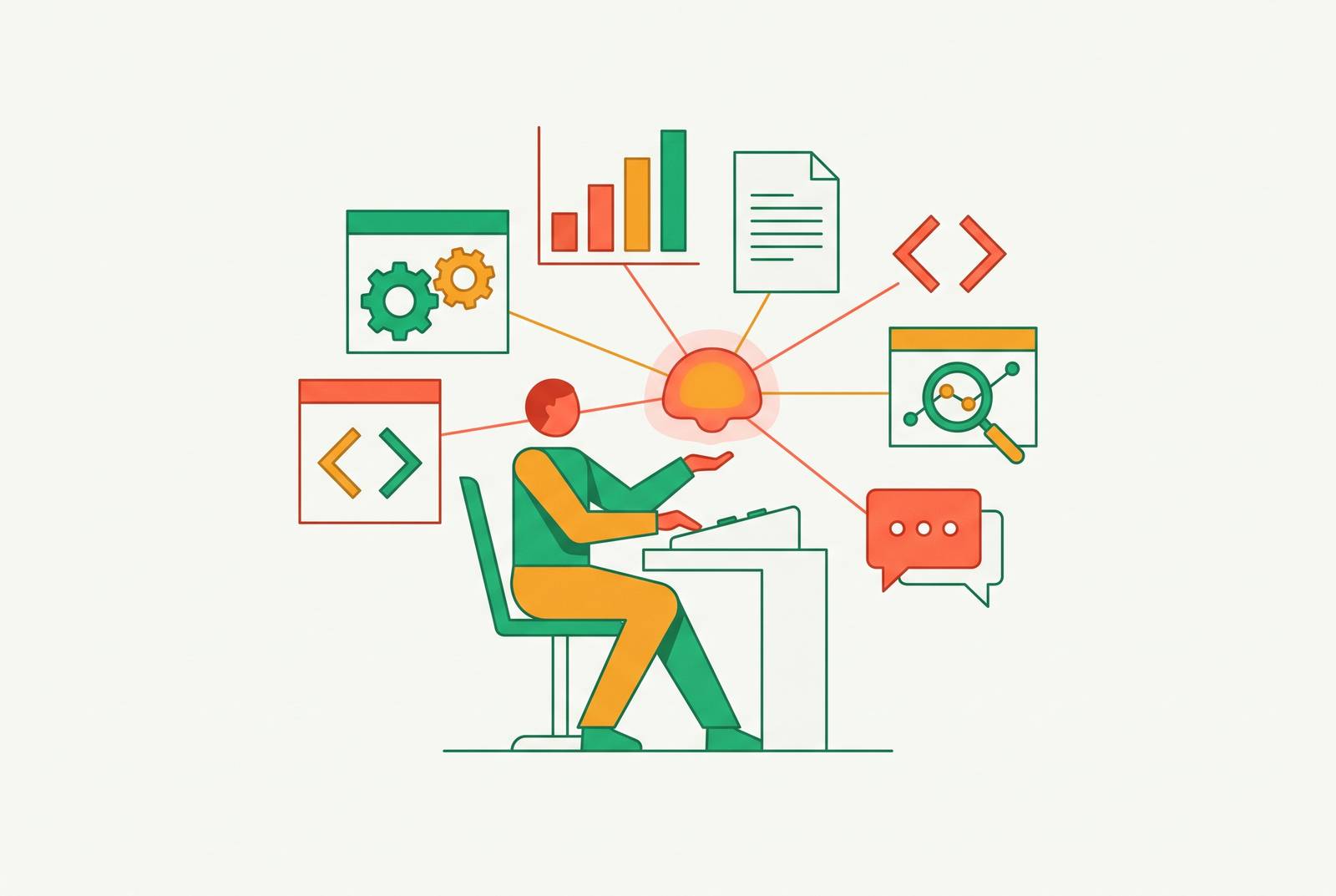
The distinction that decides whether AI changes anything is where it gets placed. AI layered on top of an existing workflow as a general productivity tool, a chat assistant a team opens occasionally, trims minutes here and there. AI embedded in the actual constraint, the specific step that blocks throughput, changes what the business can do. When the bottleneck is document processing or submission handling, the system doesn't assist a person moving through the stack of paperwork. It runs the workflow itself and surfaces only the exceptions that need a human call.
Sansatech's work with an insurance broker shows this mechanism directly: AI document processing extracts more than 300 fields per submission, cutting data entry time and compressing what used to take hours into minutes. The broker's team didn't get faster at reviewing submissions by hand. That entire category of manual field extraction stopped being part of their job.
The freight company case runs the same logic at a different scale. Automated freight intelligence tracked a large volume of routes daily and saved more than 160 hours a month, identifying substantial annual savings along the way. Those savings weren't the product of a person working more efficiently. They came from running route and rate analysis at a frequency and scale no team could staff manually, checking hundreds of routes every day where a manual process could only sample a handful each week.
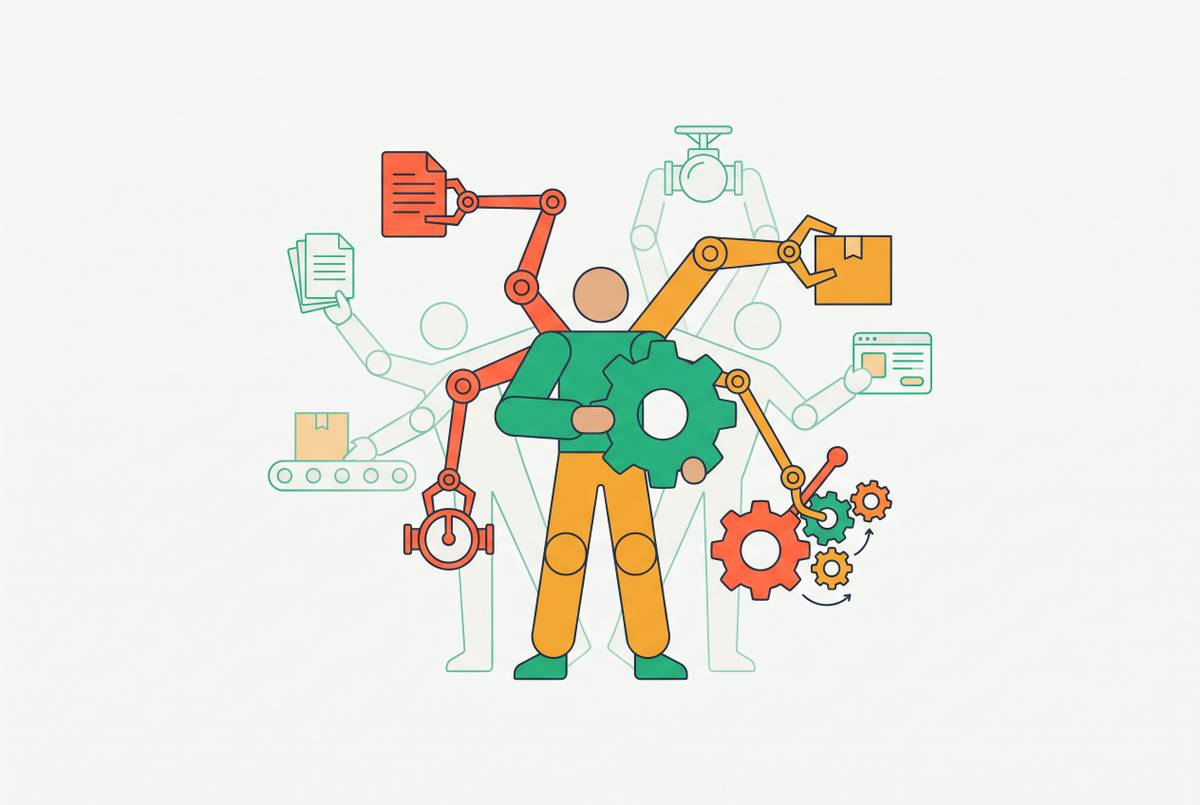
Generalize from both cases and a pattern holds across document intelligence, automated reconciliation, route and rate comparison, client onboarding extraction, and repetitive client communications: these are the hidden full-time jobs buried inside lean SMB teams, the work nobody was hired to do exclusively but that consumes the hours of whoever's available. AI embedded at that specific point absorbs the job category itself.
The team before and after
The objection arrives quickly: isn't this just automation eliminating jobs? The before-and-after picture says otherwise: before, a generalist or a junior employee handles specialist-adjacent work slowly and incompletely, usually as a distraction from whatever they were actually hired to do. It's not a specialist doing the job well; it's whoever's available doing the job as a side task. After, that same person handles the exceptions AI can't resolve, manages client relationships, and makes the judgment calls that required a human from the start, while the system runs the volume underneath them.
That after state resembles what a specialist actually does far more than the before state did. A specialist's value was never really the data entry. It was the judgment applied after the data entry was done. Sansatech's insurance broker and freight cases bear this out: the AI didn't make the existing employee faster at their old job of pushing data through forms, it absorbed the entire category of that work, document processing at over 300 fields per submission, route analysis across hundreds of daily routes, so the person could move to the relationship and judgment work that had always been harder than the data entry.
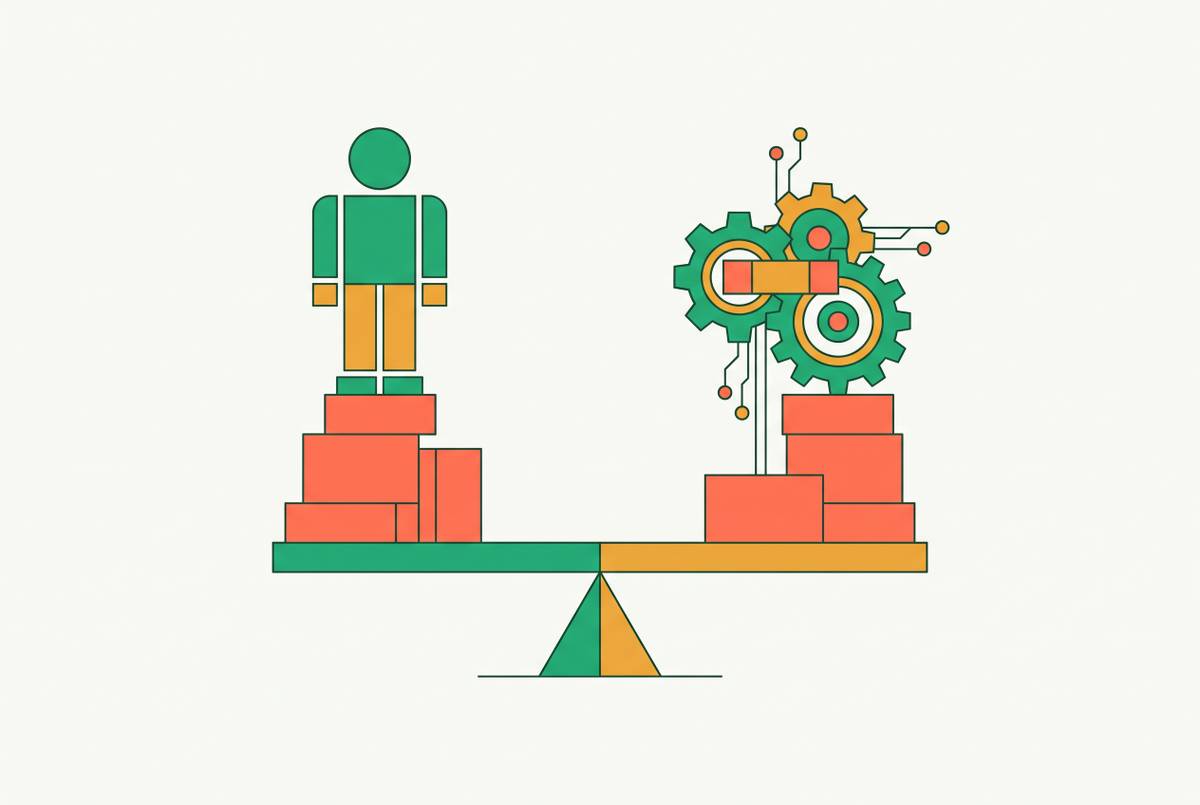
The more accurate framing of "AI replaces the specialist role" is that AI absorbs the repetitive majority of specialist work, the volume processing, the data extraction, the routine comparisons, while a generalist or existing team member covers the judgment remainder that needed a human anyway. Gusto's research on SMBs that adopted AI found these businesses were hiring faster, with the capacity AI freed up going toward growth.
The team's size doesn't change so much as its ceiling does. A five-person firm that used to turn away work it couldn't staff can now quote on it. A business that couldn't afford a compliance specialist can now make the calls that specialist used to gatekeep. When an embedded AI system absorbs the volume work that used to trap a generalist in routine tasks, the team shifts upward rather than shrinking, with the same five people now handling the judgment and relationship work that actually defines specialist-level delivery.
The industries where this transfer is happening fastest
Some industries are further along this curve than others, sharing a structural trait: high document volume, standardized data formats, and decision logic built on rules. That combination makes AI reliable without months of customization, which is why these sectors show the clearest results first.
Accounting firms and bookkeeping practices carry a repetitive load, document intelligence, automated reconciliation, client reporting, that eats billable hours without generating much billable value on its own. AI running that load multiplies what a small firm can handle without adding staff. Sansatech names accounting as a core vertical for exactly this reason: the work is structured enough to automate and frequent enough that automating it matters.
Insurance runs on the same logic at the submission level. Submission processing, field extraction, and coverage comparison are high-frequency, rule-bound tasks, and the reduction in data entry time in Sansatech's broker case, compressing hours into minutes across more than 300 fields per submission, is representative of what that bottleneck looks like industry-wide.
Logistics faces a volume problem. Rate comparison, route tracking, and freight documentation pile up fast, and the more than 160 hours recovered monthly in Sansatech's freight case came directly from running analysis at a scale no team could staff by hand.
General services firms, client onboarding, reporting, intake, follow the same pattern even where the specific documents differ. Most of what looks like specialist work in these functions is data handling that AI can absorb, which frees the team to focus on delivery. None of these four are edge cases. They're the industries where document volume and rule-bound decisions make the pattern most repeatable, and where a business owner can expect results closest to what's already been demonstrated elsewhere.
Why most SMBs are stuck in experimentation
Adoption numbers for AI among small businesses look strong on the surface, and that strength hides a real gap: most SMBs are using AI in isolated, low-leverage ways that never touch the actual constraint on their output. The typical failure is AI added as a layer on top of an existing workflow rather than embedded inside the step that limits what the business can produce, which yields marginal efficiency rather than a change in capability.
ONS data backs this up. AI adoption among businesses expanded rapidly, but most firms are using only a small number of tools to improve processes they already had, which amounts to experimentation. The number of tools per adopter has barely moved since late 2023, inching from roughly 1.4 to roughly 1.6. The same data shows adoption has stayed shallow: the average adopting business uses just 1.6 AI technologies, and only 10% of adopters describe their use as extensive. That points to limited transformative impact for the typical firm, because the tool being used is generic.
The firms getting different results follow a different sequence. They identify the single highest-leverage constraint in their operation, embed AI inside that constraint rather than around it, and measure the before-and-after in hours or output rather than in a general sense of things feeling smoother. Baytechconsulting's 2026 guide frames this year as a shift from exploration to outcome-driven execution, where the organizations succeeding treat AI as infrastructure that requires structured data, organizational alignment, and governance rather than a tool plugged in and left to its own devices. The gap between the two groups is whether the deployment targeted the actual constraint or just added another tool to the stack.
Finding the bottleneck AI can absorb: the diagnostic before the deployment
For the owner asking how to scale output without adding headcount, the starting question isn't where AI could help. Which single step, if removed or accelerated, would most change what the team can quote, handle, or deliver. That reframing matters because "where could AI help" points to a dozen small conveniences, while asking which constraint to fix points to the one place where a fix changes the ceiling.
The highest-leverage opportunity in most SMBs is usually hiding in plain view: the workflow that consumes the most time per unit of output, where the work is structured enough to describe as rules and the data already exists to feed automation. A few signals make it identifiable. A task that takes hours but produces one structured output, a completed submission, a finished rate comparison, a reconciled account, is a strong candidate. So is any workflow where a person spends most of their time transcribing, sorting, or formatting. So is any function the business is turning away or delaying because it can't staff it fast enough, since that's the clearest sign the ceiling is capped by headcount.
Data readiness is part of the same diagnostic. Embedding AI in a bottleneck only works if the data feeding that step is accessible and structured enough to automate, so part of the audit has to look at where operational records actually live and whether they're clean enough to process without months of cleanup first. Sansatech's diagnose phase runs on this exact logic: audit the operation to find the highest-leverage opportunity before building anything, with findings delivered in two weeks rather than the 90-day roadmap a traditional consulting engagement would propose. The sequence runs diagnose, then build, then embed, never the reverse.
A business owner who can name the one workflow costing the most time per unit of output has already done most of the diagnostic work. What follows is a build, not a months-long engagement to figure out where to start.
How fast a working system can be deployed
Once the bottleneck is identified and the data is accessible, the time from kickoff to a working, production-ready system runs in weeks, not quarters. That's a structural advantage smaller businesses hold over larger ones, which typically need months of governance review and system integration before a comparable tool goes live. The owner evaluating whether to build around the bottleneck or hire for it should weigh the timeline directly: a full-time specialist hire can take months to source, interview, and onboard before producing any output at all, while an embedded AI system targeting the same constraint can be running within weeks of the diagnostic.
"Embedded" has a specific meaning in this context. It means the system runs inside the workflows the team already uses rather than existing as a separate tool nobody asked to open, and it means the team gets trained on it and monitored for adoption until the results compound. Deployment without that embedding step produces tools that sit unused, which is part of why the ONS numbers show so many SMBs stuck at low tool counts: a system installed without training and follow-through doesn't survive contact with a busy team.
Baytechconsulting's 2026 guide lays out a phased roadmap that matches this timeline: a first production system targeted within a matter of months, a pilot phase with mandatory weekly review sessions, and a scale phase that rolls the same architecture out to adjacent workflows once results are validated. Sansatech's model follows the same build logic, diagnose, build, embed, and its insurance broker and freight cases show what the output looks like once a system is live: hours of manual work compressed into minutes, more than 160 hours a month returned to a freight team, both delivered on a timeline closer to a sprint than a year-long transformation program. Sansatech isn't the only place this model shows up, but its client work is a clear demonstration of it working at the scale an SMB actually operates at.
The compounding part matters most for an owner deciding whether to start. The first embedded system doesn't just return hours, it produces a clear before-and-after that tells the team exactly where the next bottleneck sits, and each system embedded after that gets cheaper and faster to deploy because the data infrastructure and the team's familiarity with the process are already in place. An embedded AI engineering engagement, where a specialist builds a system, deploys it, and stays embedded through adoption, runs at a fraction of the cost of a full-time AI engineer's salary or a six-month consulting contract, and it produces a working system on a timeline a Main Street business owner can actually plan around.