Building a Second Service Line Without Adding Headcount
Automating your bottleneck task frees capacity to launch a new service line without hiring.
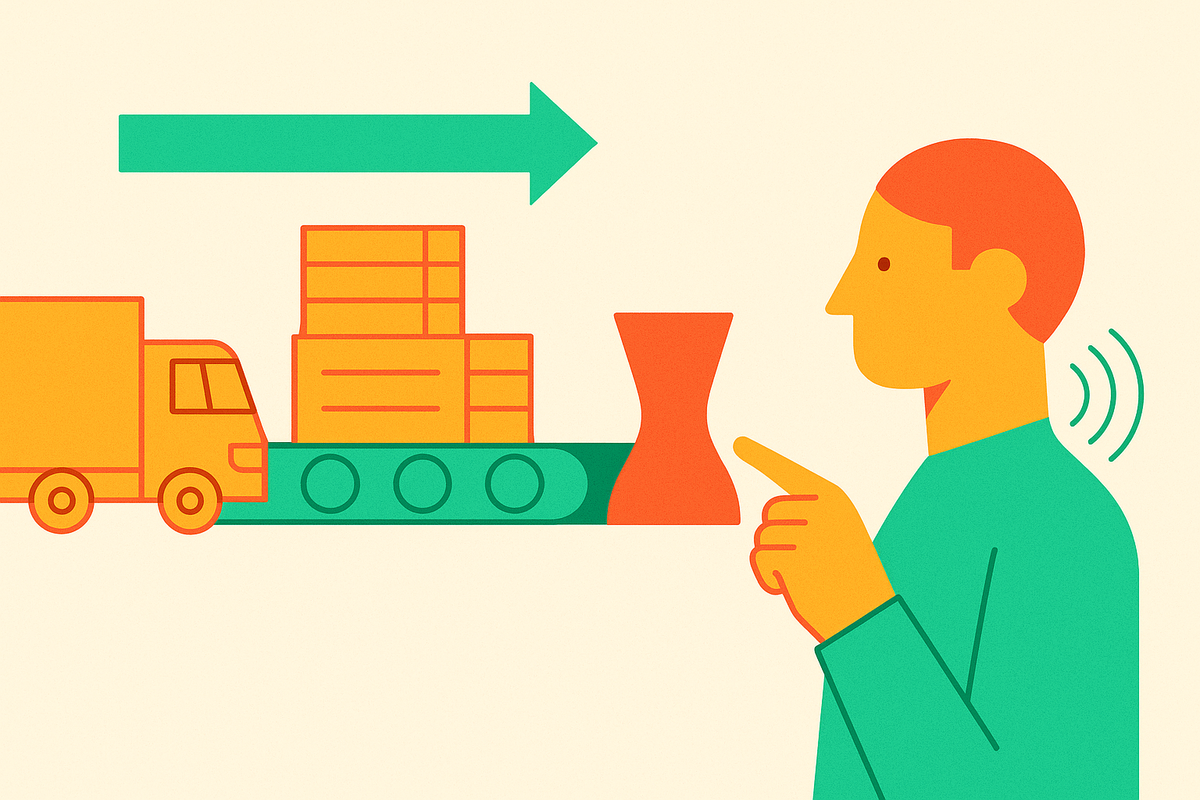
The instinct is to call the constraint "not enough people." One or two specific workflow tasks are consuming a disproportionate share of the team's finite hours, and everything downstream is blocked.
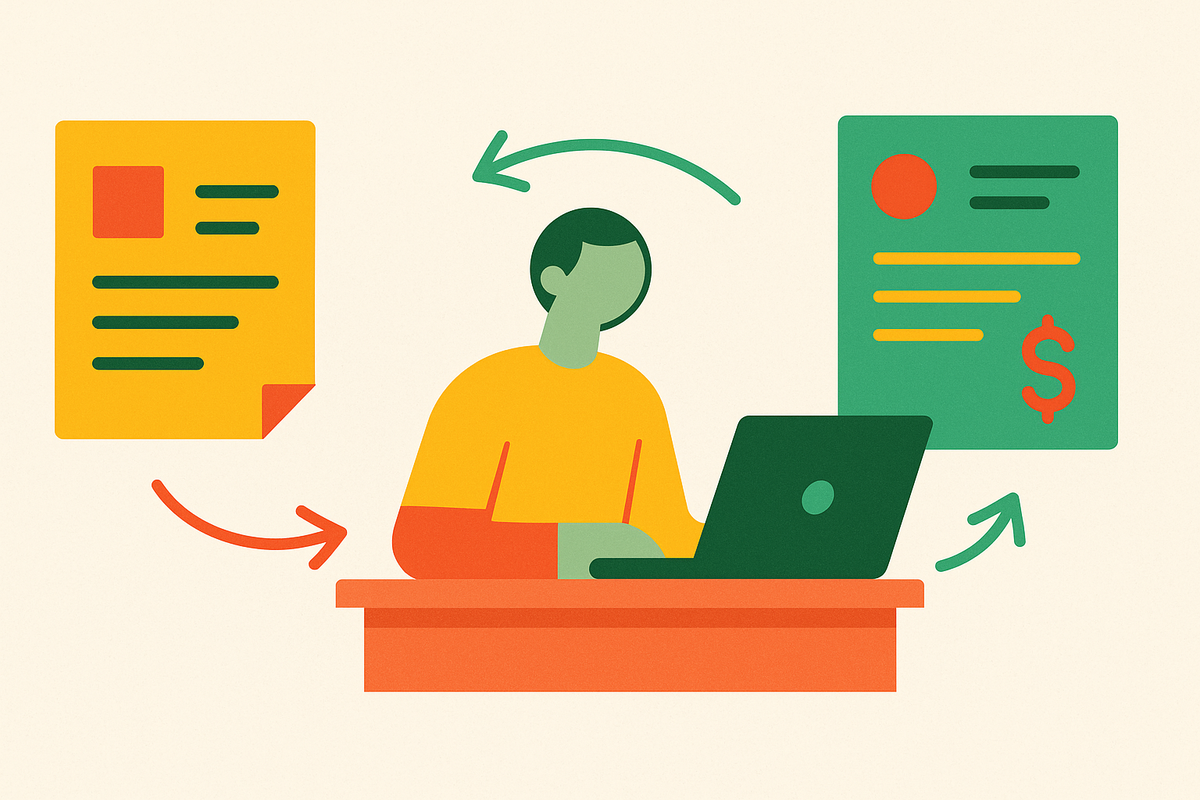
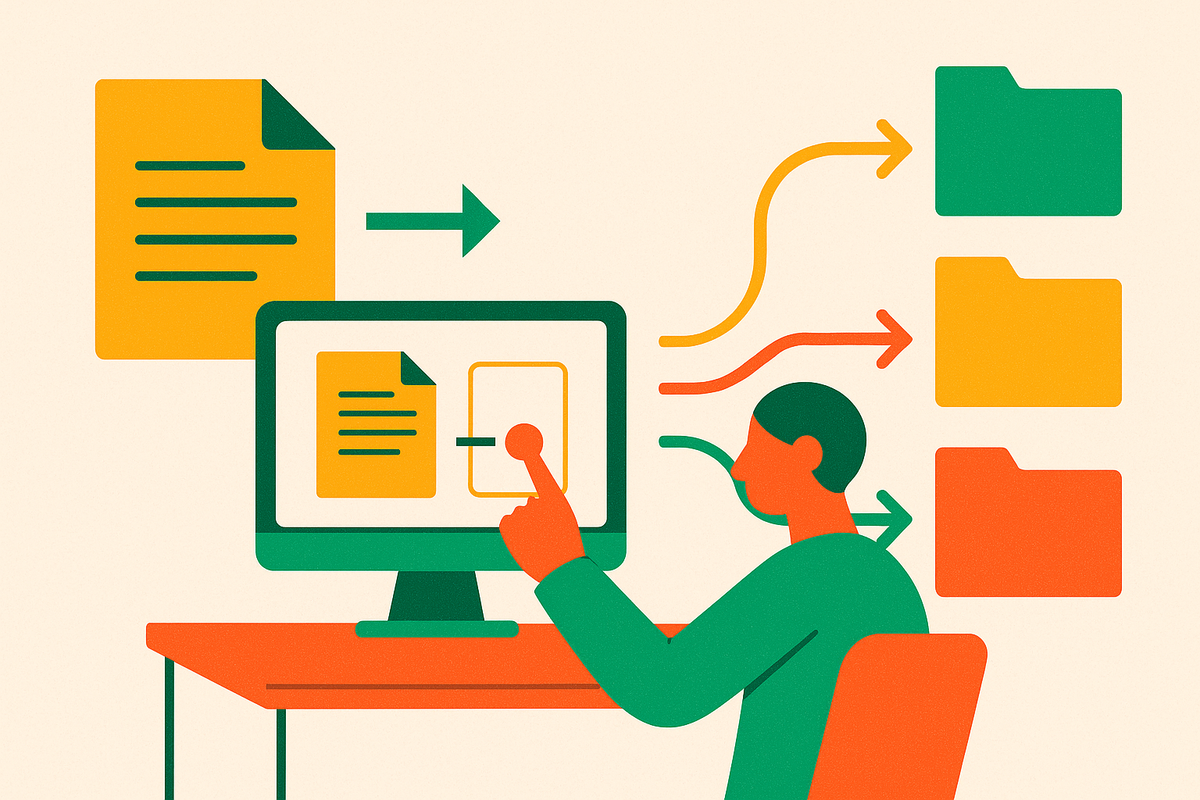
The usual suspects in SMB service businesses are tediously familiar once you know to look for them: quoting and proposal generation, which is judgment-heavy in substance but largely formulaic in structure; client intake and triage, where incoming requests get read, sorted, and routed before any skilled work begins; compliance documentation and data entry, high-volume and mandatory and almost entirely rule-based; and follow-up and scheduling, which quietly devours calendar time that doesn't require the person doing it.
Teams misidentify the bottleneck for a simple reason: the task consuming the most hours differs from the task generating the most complaints. People notice what's frustrating and overlook what's invisible. McKinsey's 2023 report "The economic potential of generative AI" found that roughly 60 to 70 percent of tasks employees spend time on could be automated with current AI technology. However, there's a meaningful difference between reading that statistic and sitting down to trace where your own team's hours actually go.
Follow the constraint backward. Ask: "Why can't we take on more work?" Keep asking why until you land on a specific task, not a general condition. If that one task took half the time it currently does, what could the team actually attempt that they currently can't? The answer is where the second service line lives.
What Happens to Capacity When the Right Workflow Gets Automated
Automating a bottleneck task saves time and changes the distribution of what skilled people are doing all day, a materially different outcome than most teams anticipate.
Gartner's survey of over 300 customer service and support leaders found that 74 percent of organizations had deployed at least one AI use case, but only 20 percent had reduced headcount; the gains went into doing more, not cutting staff. Which is precisely what a second-service-line strategy requires.
However, the redeployment step is where most implementations quietly stall. Freeing the bottleneck without intent only makes the existing operation slightly more comfortable.
What redirected capacity makes possible is concrete. A quoting bottleneck removed means the same account manager can handle more clients or a different product category. An intake bottleneck removed means the team can absorb a new client type without adding a triage role. SANSA's insurance broker case produced an 80 percent reduction in manual data entry, which freed licensed staff to do work that actually required their license rather than just their time. The ceiling got higher with the same team size.
The Case That AI Delivers New Capability, Not Just Saved Hours
Most coverage of AI in business focuses on doing the same work faster. That framing, while not wrong, leaves the more interesting finding on the table.
The capability gap in small service businesses is not about speed. It's about services they can't offer because they can't staff the specialist knowledge or the volume. A freight broker who can't offer customs advisory because nobody on the team has bandwidth to learn the documentation. An accounting firm that can't offer monthly CFO-style reporting because the prep work alone would require another staff accountant. An insurance broker that can't cross-sell a second coverage line because quoting it takes as long as quoting the primary line. These are arithmetic problems.
AI embedded in the right workflow changes the arithmetic by handling the prep, data assembly, and formatting work that has historically required a person with domain knowledge to sit there and execute. More importantly, it surfaces the right data at the right moment, enabling a generalist to deliver something that previously required a specialist. A tool that opens up a floor previously out of reach differs fundamentally from one that lets you reach the same shelf faster.
The U.S. Chamber of Commerce found that 82 percent of small businesses using AI reported workforce expansion in the past year, which correlates with more business capability, not fewer people. However, the important counterpoint, surfaced by MIT research published by Acemoglu and Restrepo, is that AI automation is economically viable in a subset of roles. The argument here is that for the specific bottleneck blocking a second service line, AI is often exactly the right tool, and identifying precisely which workflows fall into that subset is the work that actually matters.
How the Cost Arithmetic Changes When AI Replaces the Hire the Second Line Would Have Required
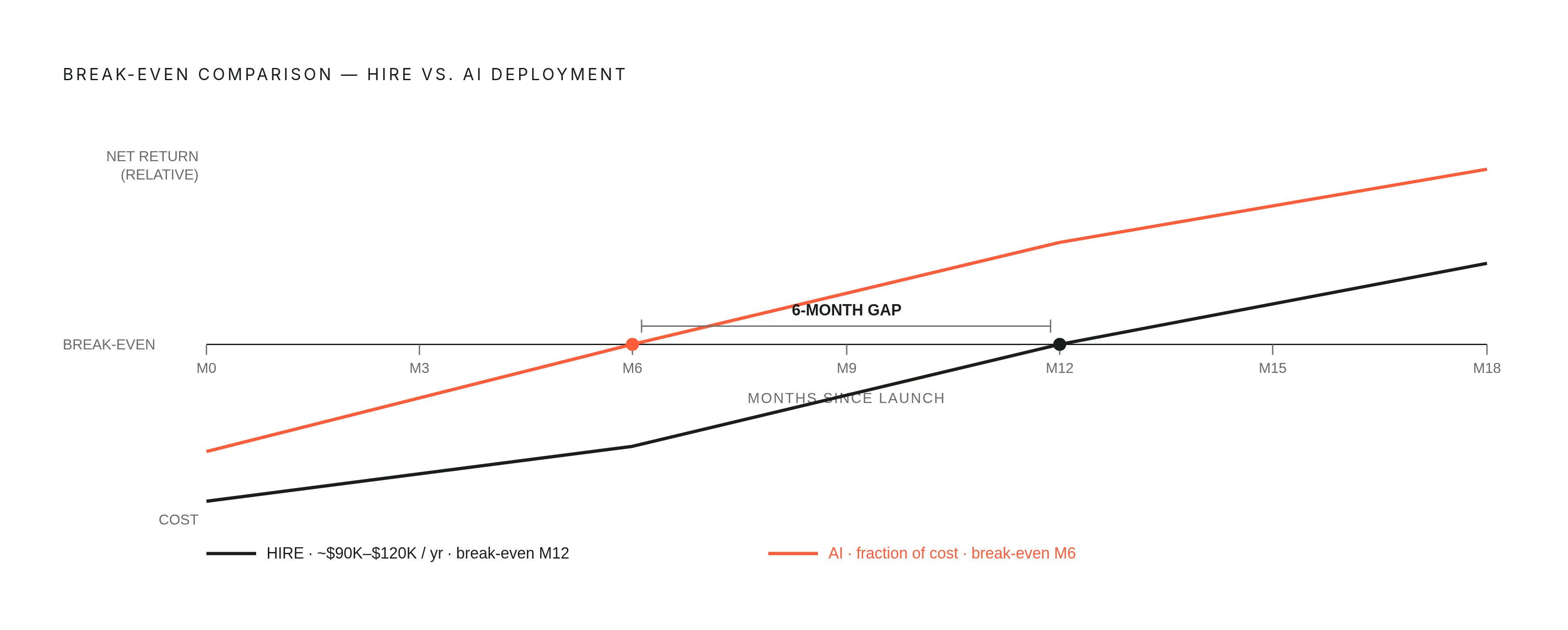
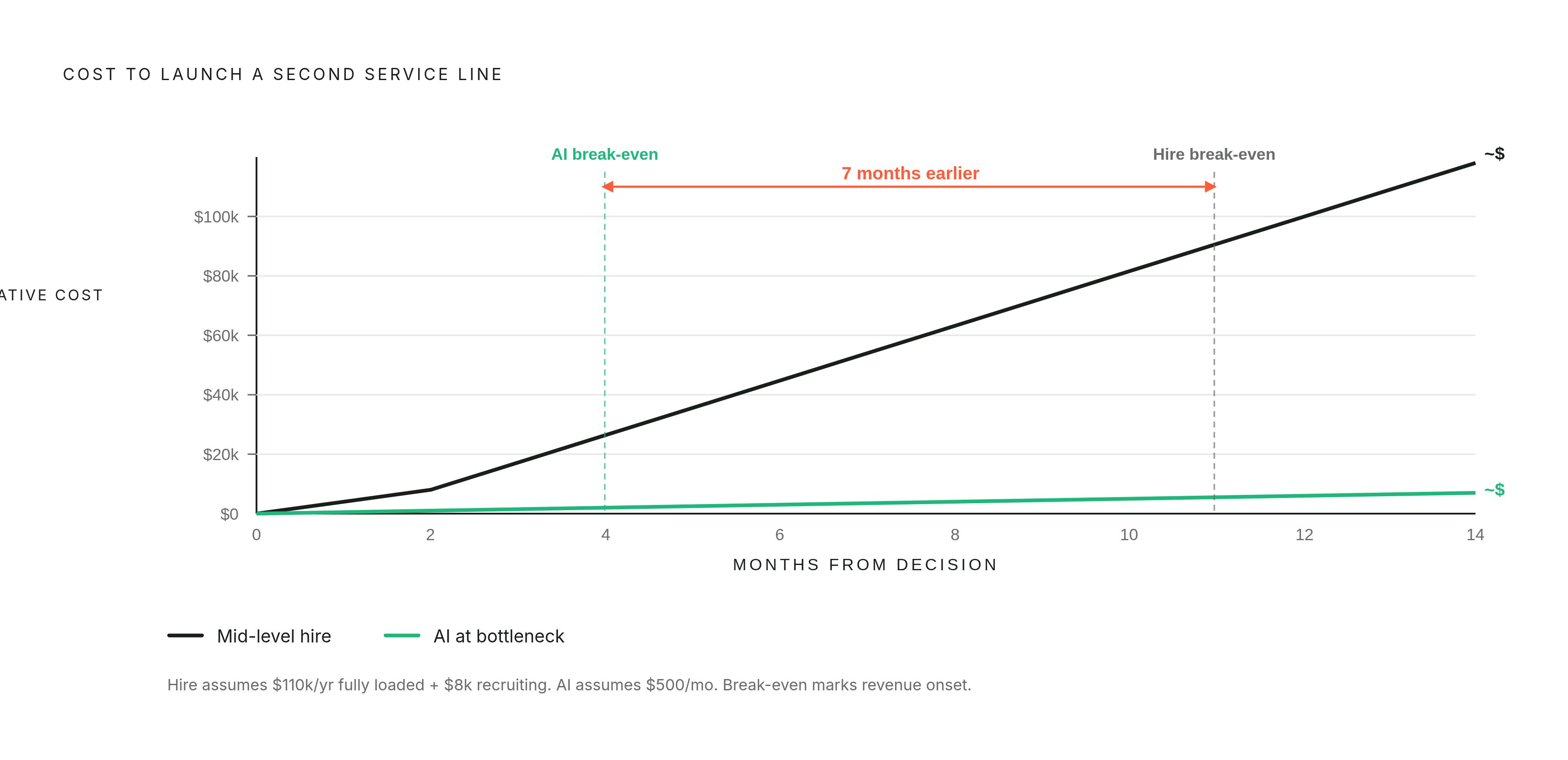
A new service line typically requires at least one person to own fulfillment. Full-time employees at mid-level roles cost well into six figures annually when benefits, overhead, and the inevitable hidden costs of managing another human are factored in. That hire is a fixed cost before the new line earns a dollar. Recruiting takes months. Onboarding takes months. The ramp to productive output takes additional months. The new line is essentially pre-funded by the existing business for the better part of a year before it turns net-positive.
The AI equivalent running at the bottleneck workflow costs a fraction of that monthly, and the scalability asymmetry compounds the advantage: doubling volume in the new service line doesn't require doubling AI investment the way it requires doubling headcount.
With a hire, the new line must generate enough to cover salary before it's net-positive, often six to twelve months out, with full risk exposure during that window. With AI embedded at the bottleneck, the existing team handles fulfillment at higher volume while the line starts generating revenue earlier. So break-even arrives earlier. Risk is structurally lower. This represents a different risk profile for the same business objective.
AI serves a narrower purpose: a targeted substitute for the specific bottleneck, not a universal staffing solution, and presenting it as such would be dishonest. The calculus depends on task type and volume. For the specific bottleneck blocking a second service line, the math often tips toward AI first, and the hiring decision, if it comes at all, should follow demonstrated demand.
What a 30-Day Path from Bottleneck to Working System Actually Looks Like
The assumption most SMB owners carry into this conversation is that AI implementation requires months, IT infrastructure they don't have, and produces something that doesn't actually fit how their business operates. That assumption is out of date.
Thirty days is a realistic implementation target for straightforward bottleneck workflows. After all, long timelines die before they produce anything: budget shifts, stakeholder fatigue, shifting priorities. Thirty days is short enough to maintain momentum and long enough to build something that runs in production.
The first two weeks are diagnostic and architectural: map the bottleneck workflow in precise detail. Where does time actually go? What inputs does the task consume, and what outputs does it produce? Which embedded decisions follow rules versus require genuine judgment? The foundational mapping determines whether the system built in weeks three and four handles the real workflow or a sanitized version of it that nobody actually encounters.
Weeks three and four are construction and calibration: build the production system around that specific workflow, not a generic tool layered on top of existing processes. The system has to handle actual data, actual integrations, and the edge cases the business regularly encounters. A production system must handle messy, real-world data.
The managed-versus-DIY distinction matters practically. That said, the people currently executing the bottleneck task know its edge cases, and that institutional knowledge has to be built into the system explicitly.
SANSA's freight company case: 160-plus hours a month recovered after implementation. That is the kind of output that frees a team to take on a new line, rather than merely running the existing one at a slightly lower cost.
How to Decide Whether the Freed Capacity Actually Supports the Second Line You Want to Offer
Not every bottleneck removal unlocks a useful second service line. The capacity freed has to match the capability the new line actually requires, and that alignment is worth checking before committing to anything.
Three questions are worth answering honestly before moving forward. Does the new line draw on the same core expertise the team already has, extended by AI's ability to handle prep and volume work? Is there an existing client base that would buy the second line, or does it require building an entirely new market from scratch? Does the bottleneck currently blocking the new line live in a workflow AI can credibly own, or does it require judgment that only the senior person on the team can make?
The most durable second lines follow an adjacency pattern. An accounting firm adding monthly financial reporting: same client, same underlying data, different frequency and format; AI handles the assembly, the accountant handles the interpretation. An insurance broker adding a second coverage line: same client relationships, same quoting workflow, AI handles the data-gathering step that made the process too slow before. A freight broker adding a compliance or documentation service: same shipment data, AI handles the classification and formatting the team lacked bandwidth to learn.
The pattern holds consistently. Adjacent second lines share the team's existing expertise, serve the existing client relationship, and require AI to handle volume and prep rather than judgment. However, when the new line requires knowledge the team lacks and that AI cannot credibly supply, the bottleneck is expertise, and closing it requires a different intervention entirely; conflating the two produces a service the team cannot stand behind.
What the Compounding Path Looks Like After the First System Is Running
The first system proves the model internally, beyond its immediate output. The team sees what AI actually does in their specific workflow, which changes how they think about what else is possible. That perceptual shift is worth at least as much as the hours recovered.
Compounding works through a predictable sequence. The second service line, once running, generates its own workflow data, which makes the next bottleneck faster to identify and the next build faster to execute. A team that has shipped one AI system has solved the hardest part: knowing their real constraint and trusting that a purpose-built system can handle it. Each system that runs independently frees the team for the next highest-value move, whether that's a third service line, a larger client category, or a decision that previously required a specialist nobody on the team was.
SBA Office of Advocacy data shows small business AI usage reached 8.8 percent in August 2025, while large business adoption declined slightly to 10.5 percent. So the gap that once made enterprise-grade AI categorically out of reach for SMBs is closing. Every small business building embedded, workflow-specific systems now is doing so before the approach becomes table stakes.
Instead of compounding, AI layered on top of a workflow as a tool nobody asked for, disconnected from the actual bottleneck, produces marginal gains that plateau quickly and creates the false impression that the technology doesn't work, rather than the accurate conclusion that it was never aimed at a real constraint.
The question is whether to use AI in a way that changes what the business can do, or merely in a way that makes the same business run slightly cheaper. The first path compounds; the second is just a subscription.